
5 Ad Creative Best Practices That Actually Drive Conversions
Just copy these strategies that top performance marketers use to create ads that convert. Learn how to grab attention, build trust, and drive action with your ad creatives.

 Follow on LinkedIn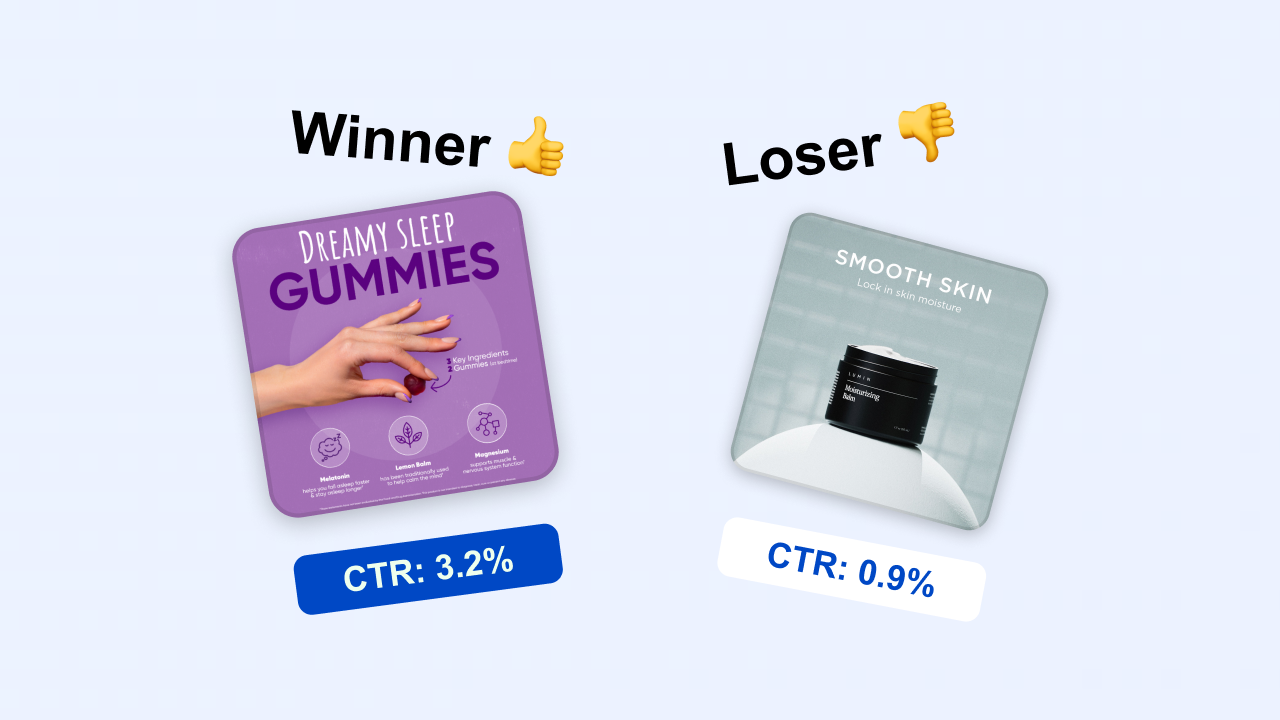
After analyzing over a hundred thousand high-performing ads, we've identified the patterns that separate winners from losers. Here are five best practices that consistently drive conversions.
1. Hook Them in the First 3 Seconds
On social media, you have mere seconds to grab attention. If your ad doesn't hook viewers immediately, they'll scroll past.
What Works
The best-performing ads open with:
- Pattern interrupts: Something unexpected that breaks the scroll
- Bold claims: "We increased ROAS by 300%" (with proof)
- Questions: "Still spending hours in Canva?"
- Relatable problems: "Tired of ad fatigue killing your campaigns?"
Common Mistakes
- Generic lifestyle footage that looks like stock content
- Slow builds that take 5+ seconds to get to the point
- Text-heavy intros that require too much reading
- Unclear value propositions
Example
Weak Hook: Video of person smiling while working on laptop
Strong Hook: "I spent $50K testing Meta ads. Here's what I learned..." Record scratch sound effect
Here are 3 real examples of ads with strong hooks:
2. Show, Don't Just Tell
People are skeptical of claims. Instead of just stating benefits, prove them visually.
Visual Proof Techniques
- Before/After: Show the transformation your product creates
- Screen and usage recordings: Demonstrate your physical product or software in action
- Real results: Display actual outcomes
- User reactions: Capture genuine surprise or delight
Of course, make sure your ads comply with the platform’s policies — though sometimes, playing a little in the gray area can boost performance.
The UGC Advantage
User-generated content (or UGC-style content) consistently outperforms polished brand content because it feels authentic. Features of effective UGC:
- Shot on a phone, not a professional camera
- Natural lighting and settings
- Real people, not actors
- Genuine enthusiasm, not scripted
With Skaler's UGC Image Generator, you can create authentic-looking UGC without hiring creators.
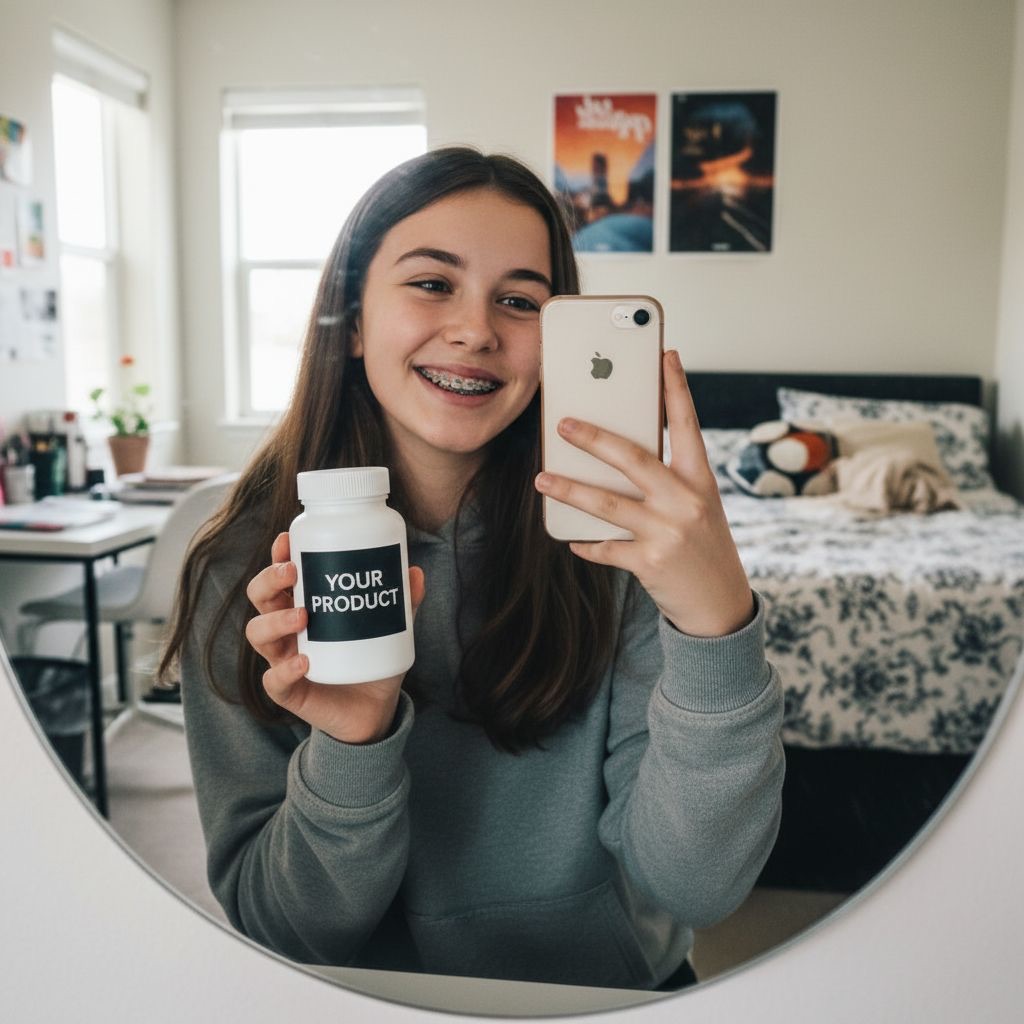 AI-generated UGC image in action
3. Nail Your Value Proposition
Every ad should answer one question: "What's in it for me?" Make your value proposition crystal clear.
The 3-Part Formula
- Problem: What pain point are you solving?
- Solution: How does your product solve it?
- Proof: Why should they believe you?
Example Breakdown
Problem: "Spending hours creating ad variations?"
Solution: "Clone any ad in 60 seconds with AI"
Proof: "Used by 1,000+ marketers to 10x their creative output"
Common Mistakes
- Listing features instead of benefits
- Using jargon your audience doesn't understand
- Being vague about what you actually do
- Forgetting to include a value prop at all
4. Optimize for Mobile
Over 90% of Facebook and Instagram users access the platforms on mobile. If your ad doesn't work on a small screen, it doesn't work.
Mobile Optimization Checklist
- Text is readable: At least 18px font size for body text, 32px+ for headlines
- Faces are visible: Close-ups work better than wide shots
- Keep it vertical: 9:16 or 4:5 aspect ratios perform best
- Subtitles included: 85% of videos are watched without sound
- CTA is clear: Button text should be obvious and compelling
The Thumb-Stopping Test
Before launching an ad, open it on your phone and scroll past it in your feed. Did it make you stop? If not, iterate.
5. Test, Measure, Scale
Creative intuition is valuable, but data beats guesswork every time.
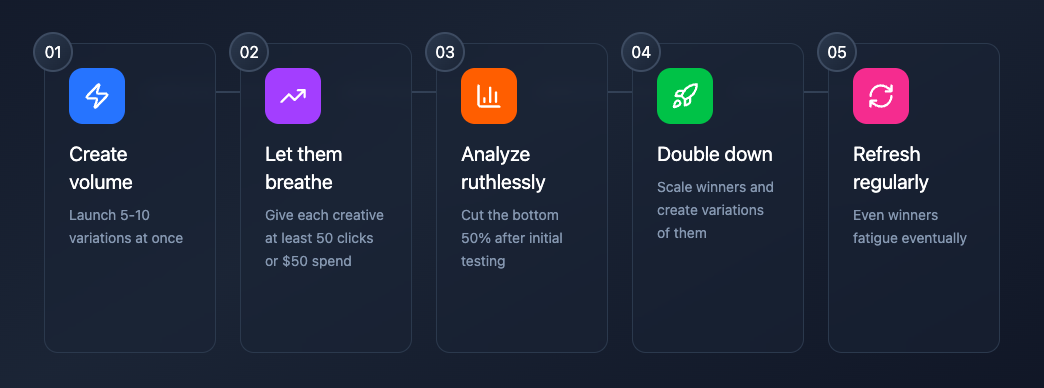 Diagram: The creative testing workflow
The Testing Framework
- Create volume: Launch 5-10 variations at once
- Let them breathe: Give each creative at least 50 clicks or $50 spend
- Analyze ruthlessly: Cut the bottom 50% after initial testing
- Double down: Scale winners and create variations of them
- Refresh regularly: Even winners fatigue eventually
What to Test
Don't change everything at once. Test one variable:
- Hooks: Same body, different opening
- Formats: Video vs. static vs. carousel
- Angles: Features vs. benefits vs. social proof
- Copy length: Long vs. short
- Colors: Background and text treatments
Using Skaler for Testing
Skaler makes high-volume testing practical:
- Find a winner with Brand Spy or Discovery
- Clone it with AI Ad Cloning
- Generate variations (different hooks, formats, angles)
- Analyze performance with Creative Analytics
- Iterate on what's working
6. Bonus: The Creative Refresh Cadence
Even your best ads will fatigue. Here's a sustainable refresh schedule:
Weekly
- Check Creative Analytics for performance drops
- Generate 2-3 new variations of any fatiguing winners
Monthly
- Launch entirely new ad concepts
- Test new formats (if you're winning with images, try video)
Quarterly
- Major creative refresh across your entire account
- Update brand messaging based on learnings
- Clone your competitors' new campaigns
Putting It All Together
Let's see these principles in action with a real example:
The Weak Ad
- Hook: Generic product shot with logo
- Body: List of 10 features in small text
- Proof: None
- CTA: "Learn More"
- Format: Horizontal video, no subtitles
The Strong Ad
- Hook: "We tested 47 ad tools. Only one actually saved us time..." with a surprising visual
- Body: Quick before/after showing their process improvement
- Proof: Real screen recording of the tool in action + customer testimonial
- CTA: "Start Your Free Trial"
- Format: 9:16 video, bold subtitles, clear text
Guess which one had a 4x higher conversion rate?
Your Action Plan
Here's how to implement these best practices this week:
- Audit your current ads against these 5 principles. Which areas need work?
- Find 3 competitor ads that nail these principles using Skaler's Brand Spy
- Create 5 variations of your best current ad, each testing one principle
- Launch and track for one week
- Review the data and double down on what works
Tools to Help
All of these best practices are easier with the right tools:
- Skaler's Brand Spy: Study competitors who are getting it right
- AI Ad Cloning: Test principles from winning ads in your brand
- Creative Analytics: Measure which principles drive results for you
- Image Generation: Create UGC and product shots at scale
The best ad creative combines art and science. Use these principles as your framework, then let testing reveal what resonates with your specific audience.
Ready to see these principles in action? Sign up for Skaler and start creating ads that convert.
Related Resources
- Top 9 Brands Crushing EU/UK Facebook Ads — Real examples from brands spending €100K+/month
- Static Ads in 2025: 25+ Examples & When to Use Them — Patterns, templates, and testing framework
- Facebook Ads Not Converting? 15 Fixes for 2025 — Diagnose why your ads aren't working
- Meta Ads Library: Complete 2025 Guide — How to research competitor ads for free
- How to Analyze Ad Performance — A data-driven approach to creative analytics
- Best AI Ad Generators in 2025 — Compare tools for creating ads with AI
Related Articles
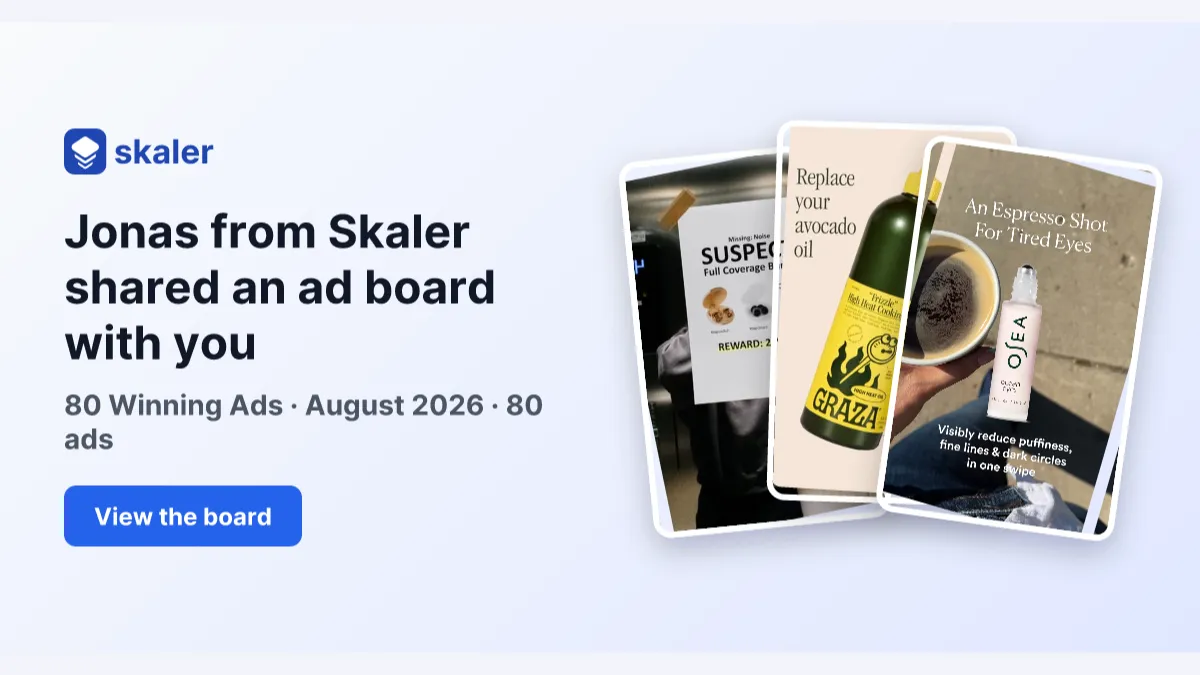
The 80 Most-Saved Meta Ads of August 2026 (Free Swipe File)
We tracked the 80 Meta ads media buyers saved the most this month — from Seed and Loop to AI soap operas running across 9 ad sets. Browse all 80 free, plus the 4 patterns behind them.
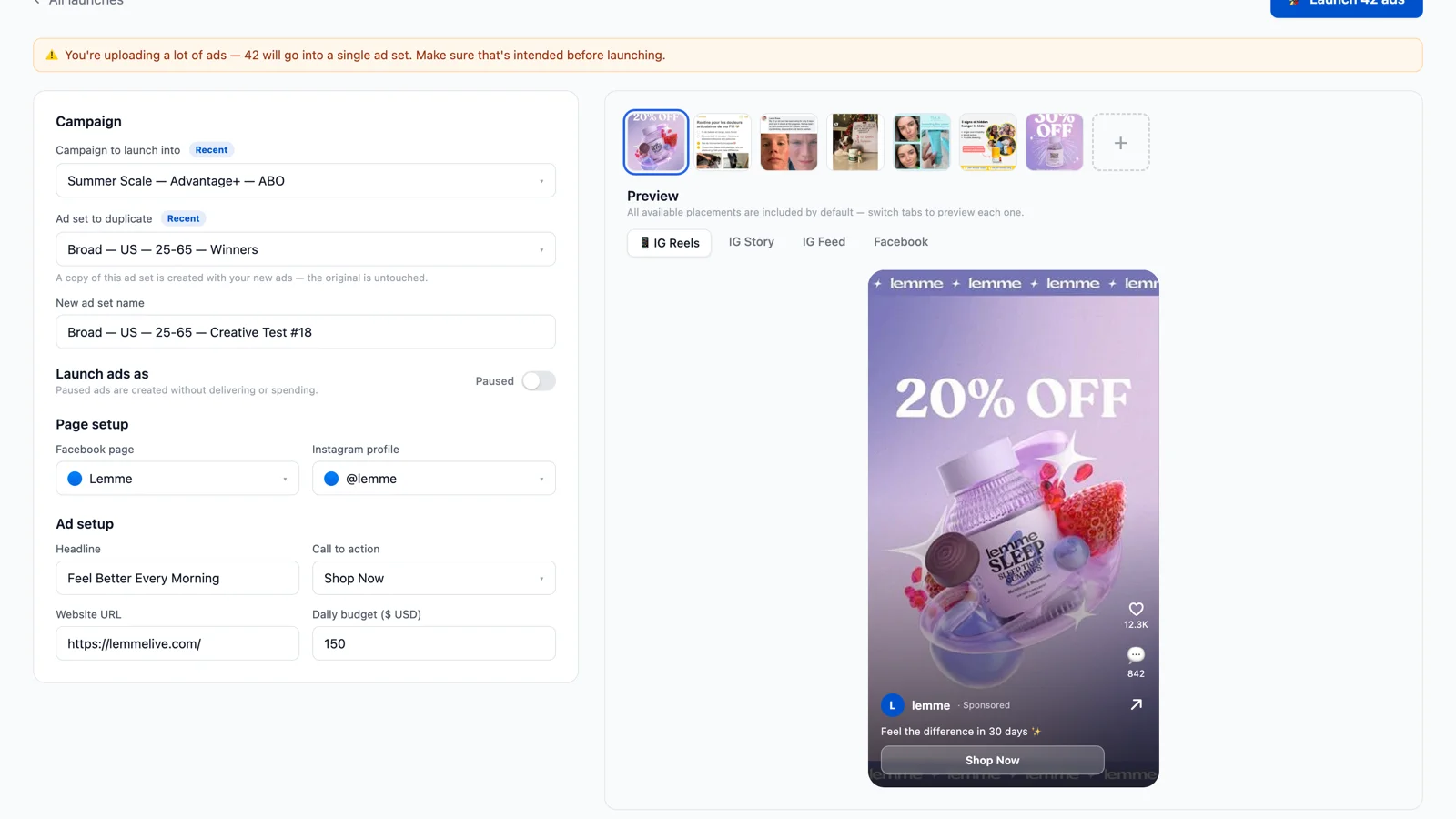
Bulk Ad Launcher for Meta: Launch 100 Facebook Ads in One Click
Skaler's new Bulk Ad Launcher takes you from creatives to live Facebook ads in minutes — drag and drop up to 100 files, duplicate a winning ad set, and launch with copy, budgets, and tracking auto-filled.